


Summarize with AI
Which products are actually trending on Shopify in 2026, and which ones already peaked? We went through Shopify's own sales data and checked five years of Google Trends to separate durable demand from fads. Then we walk through how to validate a product before you put money into inventory, with lessons from our podcast guests and client work.
The product categories with the strongest evidence behind them in 2026 are fitness and nutrition, beauty and skincare, and activewear. Shopify's own data for Black Friday Cyber Monday 2025 and its September 2025 growth figures both point there. Some of the loudest trends of the past two years, though, have already peaked.
This guide covers three things: what Shopify's data actually says, what we found when we checked Google Trends ourselves, and how to validate a product before you spend money on inventory.
What Shopify's own data says about 2026
Shopify publishes sales data from its merchants a few times a year. It is the most direct source on what sells on the platform, but each release covers a different period and method, so read the fine print.
- Black Friday Cyber Monday 2025. Shopify named cosmetics, clothing tops and pants, activewear, and fitness and nutrition as the hottest categories of the weekend (Shopify, December 2, 2025). Merchants sold a record $14.6 billion over those four days.
- Fastest-growing categories, September 2025. Shopify's trending products list (updated April 27, 2026) compares US merchant sales in September 2025 with September 2024, for categories with at least $1 million in revenue. Creatine, satchel bags, electric motorcycles and scooters, and collagen top that table.
- Summer 2025 risers. A separate Shopify article (February 11, 2026) compares US merchant sales in June 2025 with June 2024 and highlights yoga mats, wrap skirts, soap, protein powder, and Lego sets.
We don't repeat Shopify's growth percentages here. They compare a single month with the same month a year earlier, which can swing on one viral product or one big brand joining the platform. The same Shopify page also lists different figures for the same category in different sections. Treat these lists as a map of where to look, not as a forecast.
What we found in Google Trends (checked November 5, 2026)
Google Trends shows whether interest in a product is still growing, has flattened, or has already collapsed. We checked a mix of trending and recently viral products for the US, web search, from November 1, 2021 to October 31, 2026. We compared the last 12 months (November 2025 to October 2026) with the 12 months before.
| Search term | Shape over 5 years | What it means for a new store |
|---|---|---|
| creatine | Steady climb since 2022, still rising in the last 12 months | Durable demand, but a crowded and regulated category |
| red light therapy | Steady climb every year since 2022 | Growing interest, with health claims you have to back up |
| matcha | Sharp jump in 2025, slower growth in 2026 | Still large, but the early-mover window has closed |
| weighted vest | Jumped in 2025, peaked in July 2025, flat since | Demand plateaued, so competition decides margins now |
| beef tallow (skincare) | Peaked in March 2025, lower in the last 12 months | Past its peak |
| Labubu | Peaked in June 2025, now at about 3% of that peak | A textbook fad |
| Stanley tumbler | Peaked at the end of December 2023, much lower since | The trend is over |
A warning about spring 2026. Generic control terms like "shoes" and "shampoo" also jumped in March to May 2026 and peaked in the same week in April as several of our product terms. If your chart shows a spike in spring 2026, it may not be about your product. Always add one boring, stable term to your comparison before you trust a spike.
Google Trends shows relative interest (0 to 100), not search volume or sales. Use it to judge the shape of demand, then confirm the size with keyword tools and marketplace data.
Trending product categories for 2026
These categories have support in Shopify's 2025–2026 data. For each one we added what to watch out for, because a trending category is also the one every new store is entering.
Fitness and nutrition
Creatine, collagen, protein powder, and single vitamins all appear in Shopify's growth data, and fitness and nutrition was one of the hottest BFCM 2025 categories. In Google Trends, creatine kept climbing through the last 12 months.
What to watch: supplements are a regulated category. Health claims on the label, on the product page, and in ads must meet the rules of every market you sell to. Margins also depend heavily on repeat orders, so plan subscriptions from day one.
Beauty and skincare
Cosmetics led Shopify's list of the hottest BFCM 2025 categories, and lip balms and collagen show up in the September 2025 growth table. Beauty devices like red light therapy masks are a growing niche inside the category.
What to watch: skincare trends move fast (beef tallow peaked in early 2025). A durable brand needs a product people reorder, not just one viral ingredient.
Activewear and athletic shoes
Activewear was one of the hottest BFCM 2025 categories, and athletic shoes appear in Shopify's September 2025 growth table.
What to watch: this is one of the most competitive categories online. A new brand needs a clear niche (a sport, a body type, a price point) and a sizing approach that keeps returns under control.
Eco-friendly and sustainable products
Reusable water bottles, refillable cleaning products, and clothing made from recycled fabrics still attract shoppers who want to cut waste. Shopify's February 2026 article lists reusable water bottles among products worth selling.
What to watch: if you sell in the EU, rules on green claims got stricter. Since September 27, 2026, the EU bans generic environmental claims like "eco-friendly" or "green" that you cannot back with evidence (European Commission). Name the specific benefit and keep the proof.
Pet products
Shopify's trending products list highlights pet supplements and pet shampoo as growing subcategories. Owners keep trading up to higher-quality food, supplements, and care products for their pets.
What to watch: pet food and supplements have their own labeling rules, separate from human products.
Personalized goods
Personalized products give shoppers a way to express themselves, and print on demand lowers the cost of testing designs. Popular examples include:
- engraved jewelry and accessories,
- custom-printed apparel and tote bags,
- photo gifts and custom prints,
- personalized stationery and planners.
What to watch: personalized items made to the customer's specification are usually excluded from the EU 14-day right of withdrawal, but mistakes on your side still come back as complaints. Offer either a wide range of ready designs or a customization process (engraving, printing) you can deliver exactly as ordered.
Arts, crafts, and DIY supplies
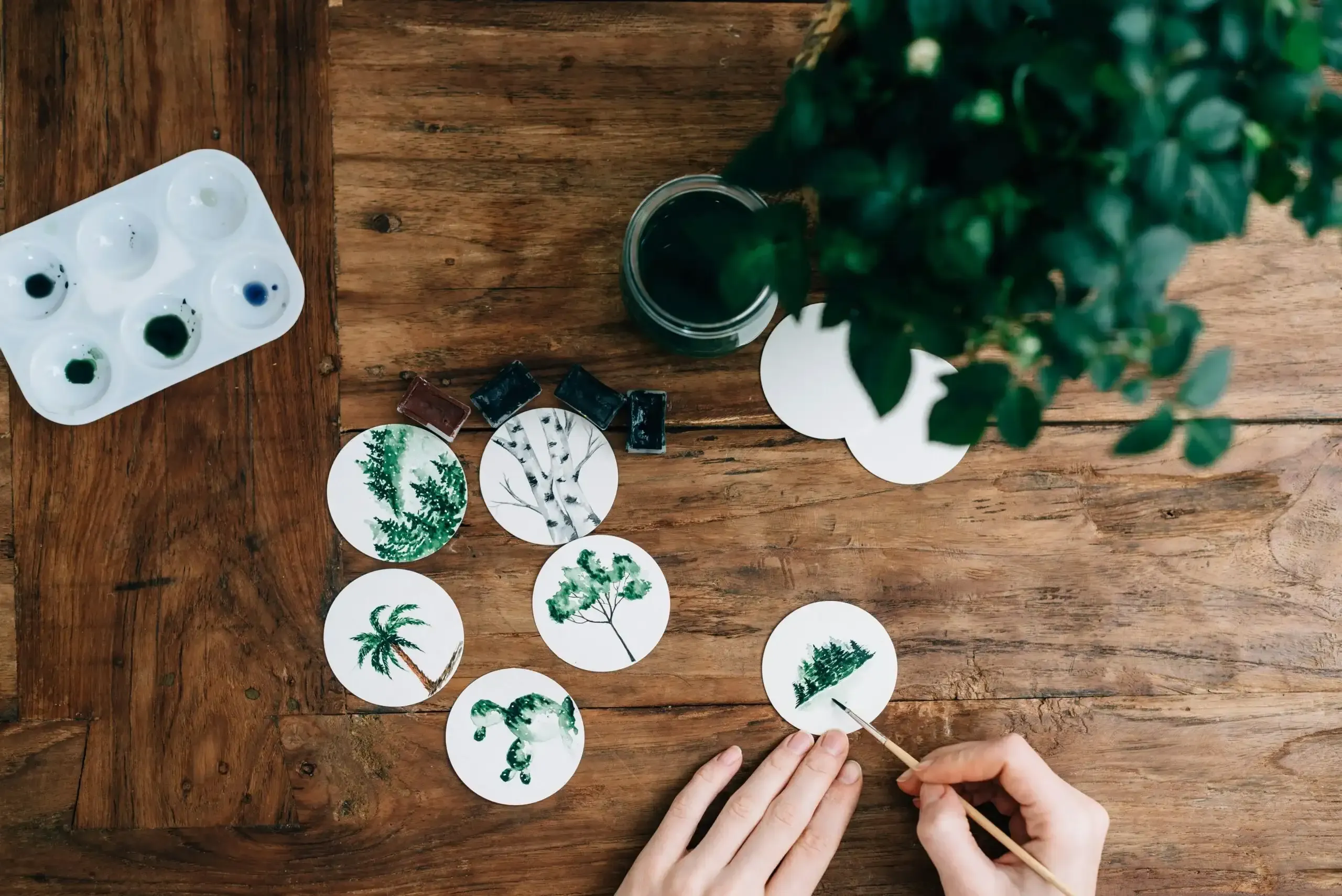
Arts and crafting materials appear in Shopify's top-selling categories, and the hobby that grew during the pandemic has stayed with many people. Craft kits and refill supplies are a good fit for repeat purchases, because every project uses up material.
Subscriptions and replenishment
Many of the categories above (supplements, coffee, skincare, pet food, craft supplies) are things people run out of. A subscription turns one trending product into recurring revenue. Shopify's own free Shopify Subscriptions app supports weekly, monthly, or yearly renewals for physical and digital products. We compare the main models in Ecommerce subscription models.
How to validate a product before you invest
A trending category tells you where demand is. It does not tell you whether your version of the product, at your price, will sell. These steps cost far less than a container of stock.
1. Check the shape of demand, not the peak
Look at five years of Google Trends, not the last 90 days. Steady growth over several years is a better sign than a single spike. Add a stable control term, as described above, so a platform-wide jump doesn't fool you.
2. Test on a marketplace first
Marketplaces show you real demand before you build a store. On our podcast, Kamil Frejlich, co-founder of wecanfly, put it this way: marketplaces are good for validating a product, because they let you check quickly whether something new has a place in the market. Once sales grow, marketplace commissions start to hurt, and that is the moment to invest in your own store.
Selsey, the furniture brand we work with, followed this path. CEO Mirosław Mikołajczak told us in our podcast episode: "We started on marketplaces: on Groupon, on Allegro, on Polish Westwing." Today Selsey sells in eight European markets through its own stores.
3. Work out unit economics, including shipping
A product can be in demand and still lose money. In the same podcast episode, Kamil described a client who sold cotton pads: one pack cost about $10 and shipping cost about $7. Shoppers who bought several packs at once went through checkout, but people who wanted a single pack dropped off at the shipping cost.
Before you order stock, calculate the price of one order with product cost, shipping, payment fees, returns, and the ad spend needed to win the customer. Our article on why most ecommerce businesses fail goes through the full cost list.
4. Start with small batches, drops, or pre-orders
You don't need full inventory to learn whether a product sells. ANSIN, a premium fashion brand on Shopify Plus, sells in monthly drops, which limits deadstock and focuses demand on a launch date (ANSIN's scaling strategy). Pre-orders and print on demand work the same way for smaller stores.
5. Run a small paid test
Set up a simple product page on Shopify, run a small ad budget, and measure add-to-cart and checkout rates. If people click but don't buy, ask why: price, photos, shipping cost, or the wrong audience.
6. Check the rules before you scale
Supplements, cosmetics, pet food, children's products, and anything with environmental claims have rules that differ by market. Check them before you print packaging, not after your first complaint.
The takeaway
The safest trends for 2026 are the slow ones: fitness and nutrition, beauty, activewear, and products people buy again. Fads like Labubu or the Stanley tumbler can make money for sellers who are early, but they collapse just as fast. Whatever you choose, validate it with real data and small tests before you commit to inventory.
When a product proves itself and you are ready to move from a marketplace or a basic theme to your own brand store, our team can help with Shopify store design.
You may also read: Foreign Returns on Shopify: 10 Tips for Selling Internationally